
Percolation tests
Need a percolation test for a planning application, replacement treatment plant or proposed soakaway?
We carry out professional percolation testing for homeowners, architects, developers and planning consultants across Cheshire and the North West. Our tests help assess how well the ground drains and whether the site is suitable for a drainage field, soakaway or private off-mains drainage solution.
✔ Fast site attendance
✔ Clear reporting
✔ Practical advice




What is a percolation test?
A percolation test measures how quickly water drains through the ground. It is commonly used where a property cannot connect to a mains sewer and needs an off-mains drainage system, such as a septic tank, package treatment plant or drainage field. The results help determine whether the soil can absorb treated wastewater at a suitable rate.
If the ground drains too slowly, the drainage field may flood or fail. If it drains too quickly, wastewater may pass through the soil too fast, increasing the risk of pollution. A percolation test helps identify whether the ground conditions are suitable before a system is designed, installed or submitted for approval.
For rainwater soakaways, infiltration testing may also be needed to understand whether surface water can drain into the ground effectively. This is different from foul drainage design, but the principle is similar: the test shows whether the ground can accept water at the required rate.
When do you need a percolation test?
You may need a percolation test when you are proposing any drainage system that relies on water soaking into the ground.
Common reasons include:
Replacement treatment plants
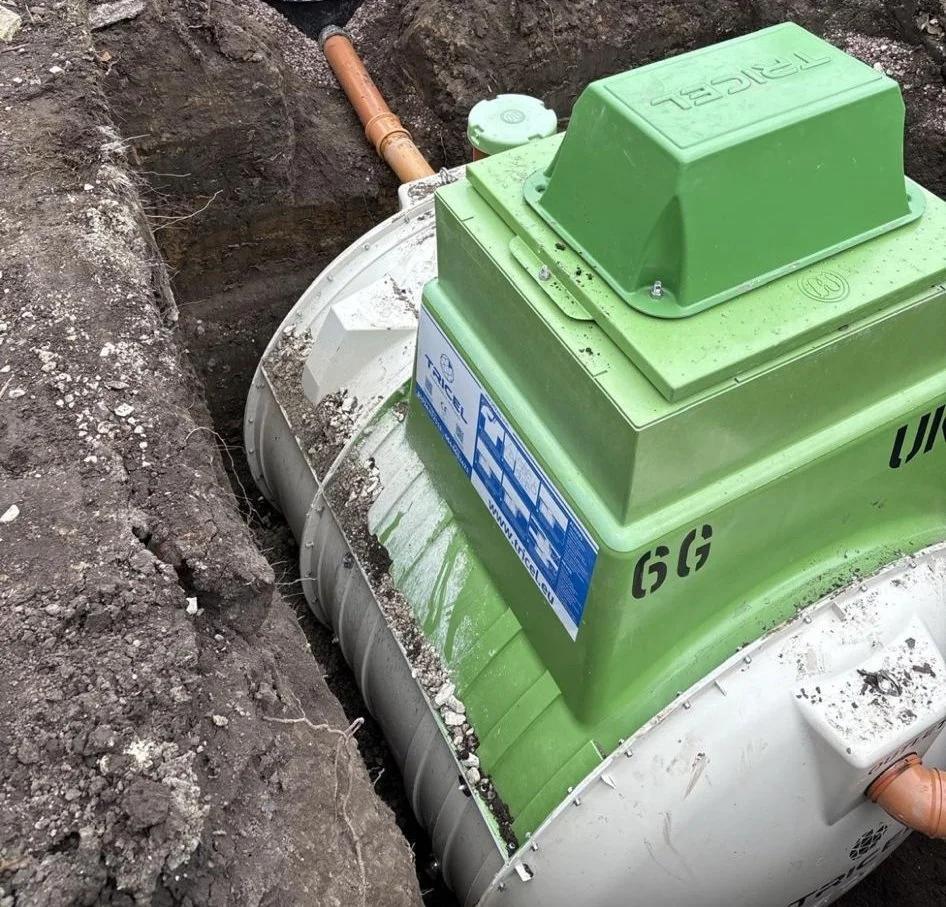
If you are replacing an old septic tank or upgrading to a package treatment plant, the discharge route still needs to be suitable. A percolation test helps check whether a drainage field can be used and whether the existing ground conditions are appropriate.
Drainage field design
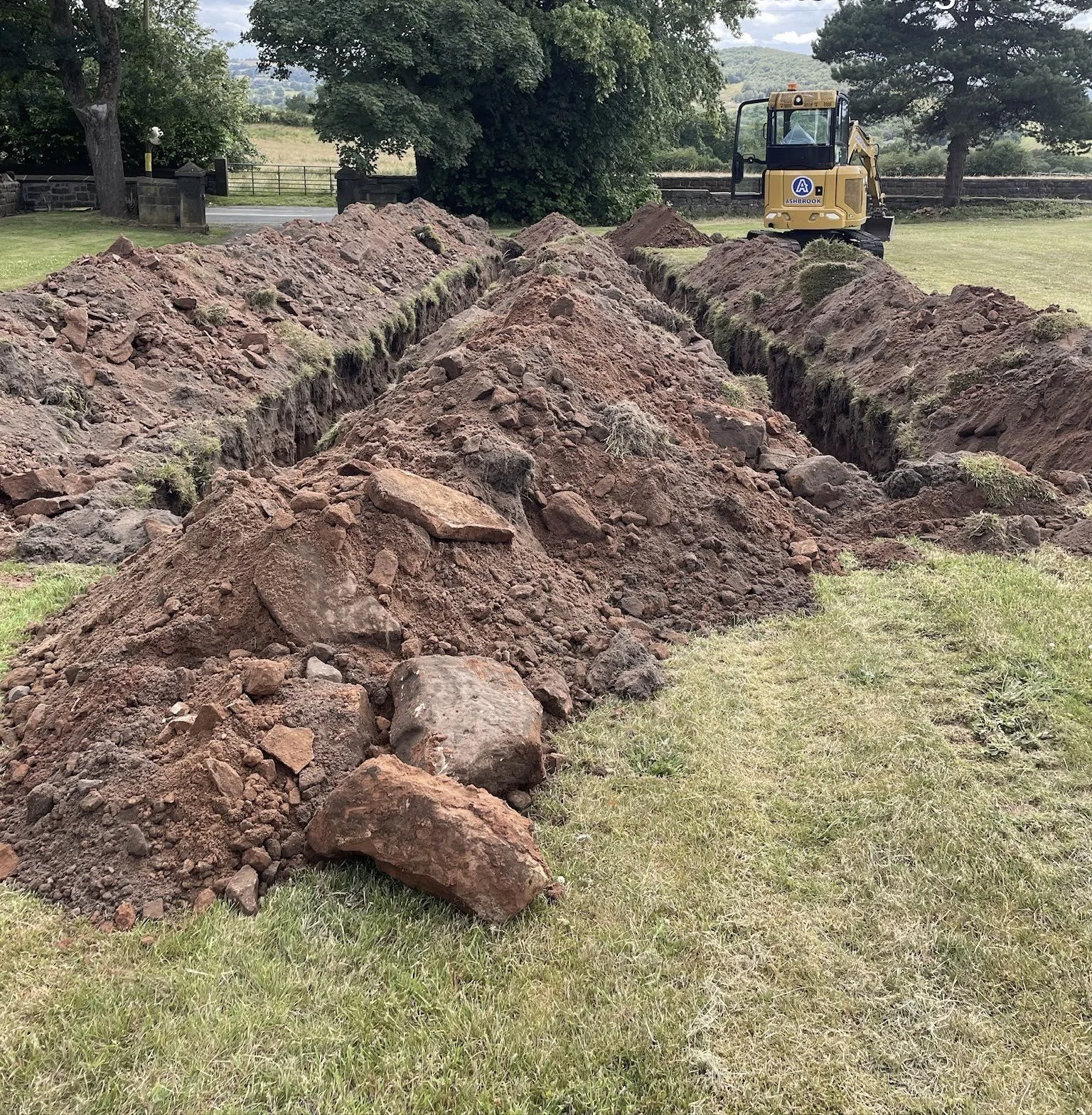
Drainage fields need to be designed around the soil’s ability to absorb treated effluent. The percolation result helps your drainage designer or installer size the drainage field correctly.
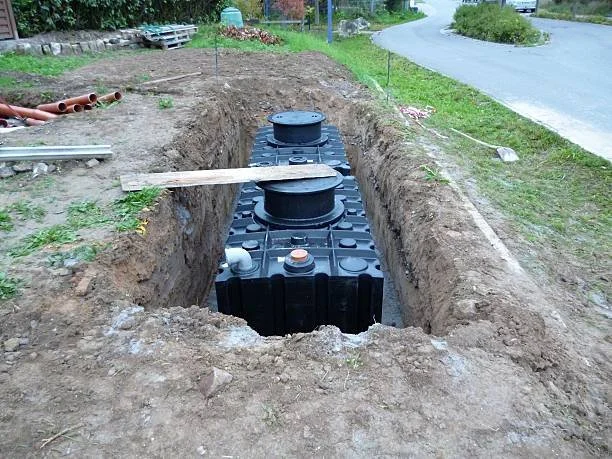
Soakaway installation
For surface water drainage, soakaway testing helps assess whether rainwater can drain into the ground. This may be needed for extensions, driveways, new roofs, hardstanding areas or wider site drainage strategies.

Planning applications
Local planning authorities may request drainage information before approving a development, particularly where the property is not connected to a public sewer. A percolation test can support the drainage strategy for a new dwelling, barn conversion, extension or rural development.

Building control requirements
Building Control may ask for evidence that the proposed drainage arrangement is suitable, particularly where a new off-mains foul drainage system is being installed.
How we carry out the test
Every site is different, but our process is designed to be clear, practical and easy to follow.
-
We start by reviewing the site location, the reason for the test and any information you already have. This might include planning drawings, proposed drainage layouts, treatment plant details, architect plans or previous drainage information.
-
On site, we identify the proposed drainage field or soakaway location. We consider access, levels, nearby buildings, boundaries, watercourses, existing drainage assets and any obvious site constraints.
-
Trial holes are excavated in the proposed drainage area. The size, depth and number of holes will depend on whether the test is for foul drainage, a drainage field or surface water soakaway assessment.
-
We record the ground conditions encountered during excavation, including soil type, depth, signs of groundwater, made ground, clay, stone, roots or other relevant observations.
-
The test holes are filled with water and prepared for testing. Depending on ground conditions, pre-soaking may be needed so that the test reflects how the ground behaves once wetted.
-
We measure and record how long the water takes to fall through the required depth. This gives the percolation or infiltration rate used to assess the suitability of the ground.
-
Where multiple holes or repeat tests are needed, we carry these out across the proposed drainage area to give a more representative result.
-
After the visit, we prepare a clear report with the test results, photographs, observations and practical comments. This can be shared with your architect, planning consultant, drainage designer, installer, Building Control officer or local authority.
Our percolation test reports
Our percolation test reports are designed to be clear, practical and useful.
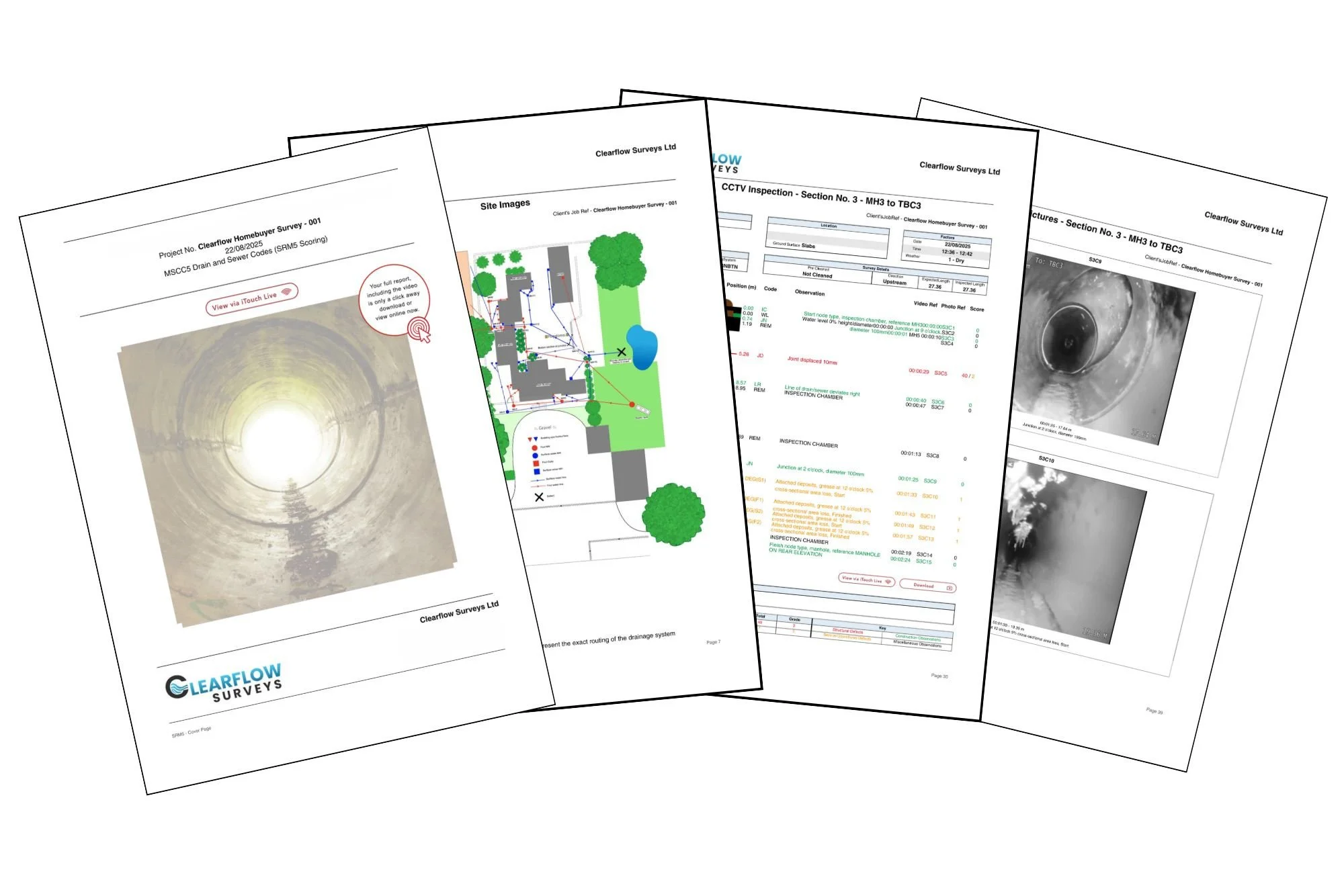
A typical report includes:
Site address and client details
Reason for testing
Test hole locations
Ground condition observations
Water level measurements
Percolation or infiltration results
Comments on suitability
Practical recommendations
Limitations and next steps
Site photographs
Why percolation testing matters
A percolation test is a small part of a project, but it can prevent much larger problems later. Without proper testing, a drainage field or soakaway may be designed for ground that cannot cope with the volume of water. This can lead to standing water, foul drainage failure, pollution risk, planning delays, Building Control issues or costly redesign work.
Testing early gives you evidence. It helps your professional team understand whether the proposed drainage solution is realistic, whether the layout needs to change and whether further design input is needed before work begins.
For planning applications, a clear percolation test report can also help avoid delays by giving the local authority, drainage consultant or Building Control team the information they need to assess the proposal.
Past Projects
Percolation test for new build in Alsager, Cheshire
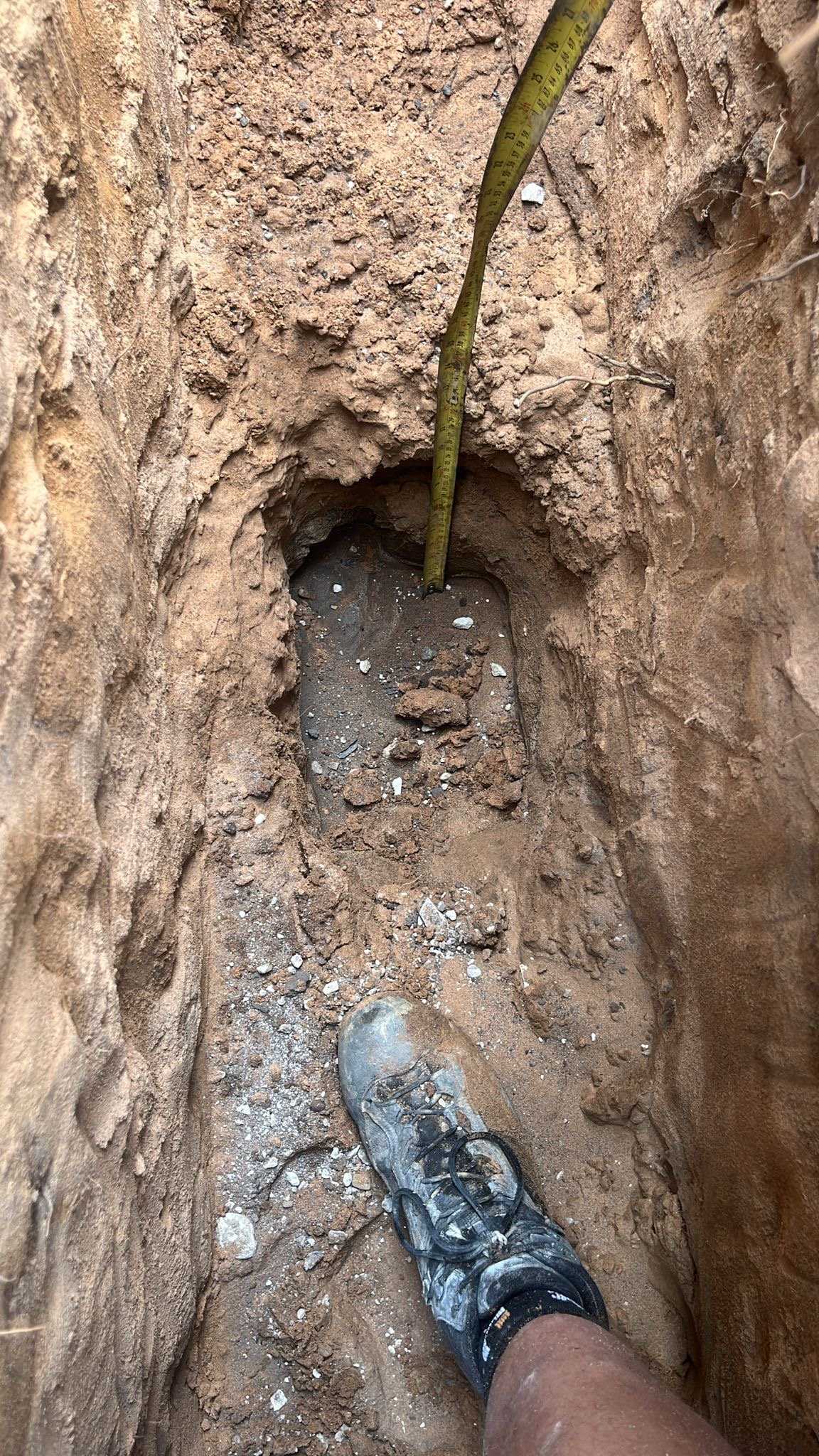
We recently completed a percolation test for a residential property in Alsager to assess the suitability of the ground for surface water drainage via a soakaway system. The test pit was excavated to the required invert level and test pit dug at the base measuring 300mm x 300mm x 300mm, with sandy ground conditions recorded on site.
The test began at 15:39 and had fully infiltrated by 15:57, demonstrating good drainage characteristics. Using the results of the infiltration test, we calculated the required soakaway capacity for an estimated roof area of approximately 150m².
Our report included photographic evidence of the test stages, ground conditions, test pit depth, infiltration times and a clear recommendation for the required soakaway size. This provided the client with the information needed to support drainage design and surface water management for the property.
Percolation test for new build in Lower Withington, Cheshire
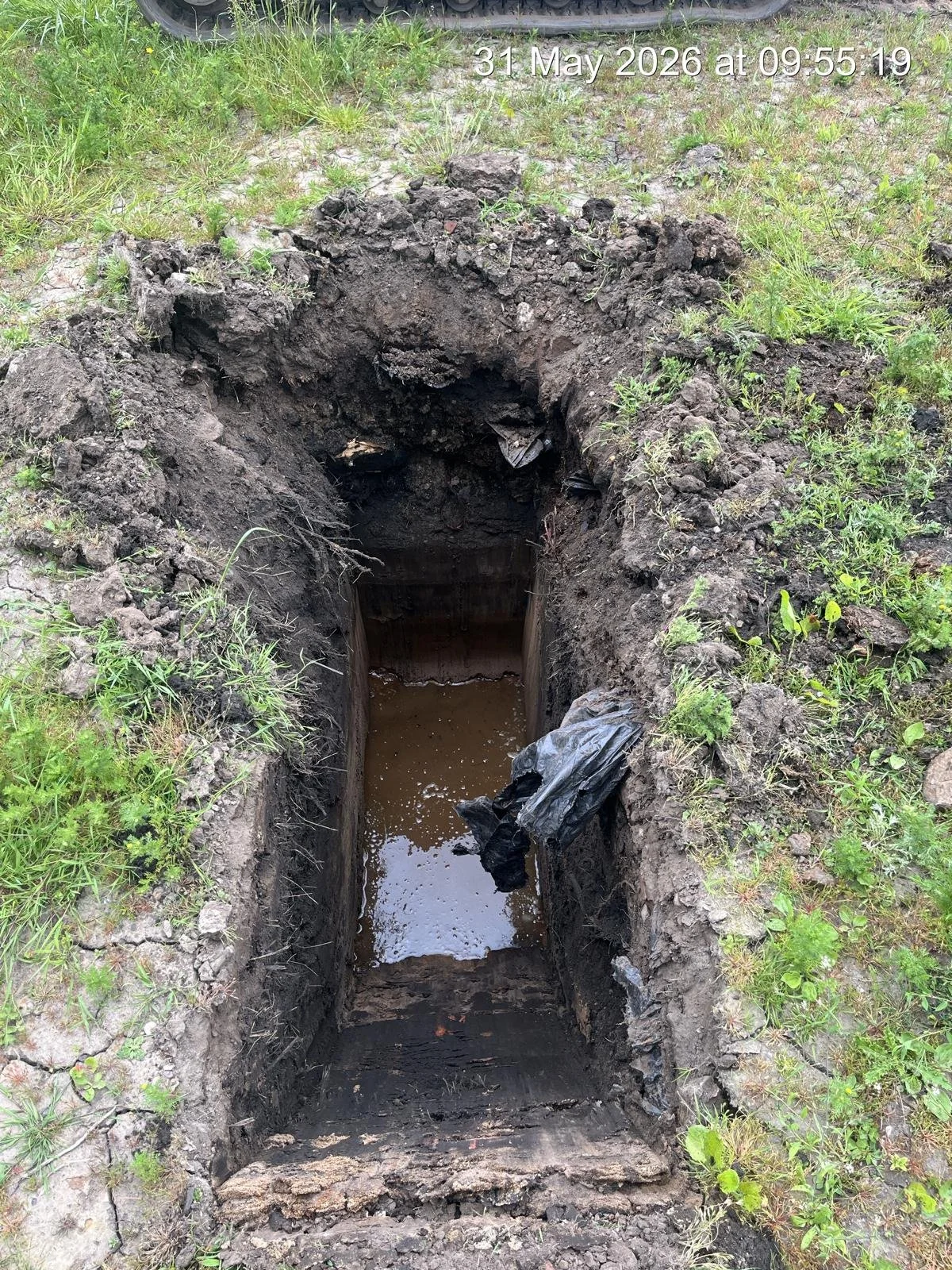
We recently attended a new build property in Lower Withington, Cheshire to carry out a percolation test and assess the suitability of the proposed area for a soakaway drainage system. The homeowner had excavated a trench to the required invert level ahead of the test. However, once the excavation was inspected, it was clear that the local water table was too high, with groundwater already present in the bottom of the pit. As a result, a standard percolation test could not be completed, as the test water would not have been able to drain away naturally.
Following the site assessment, we worked with the homeowner to review the drainage constraints and help identify a more suitable alternative surface water drainage solution. The homeowner is now working with their architect to progress the revised design through planning.
This project highlights the importance of early drainage investigation on new build developments, particularly where soakaway drainage is being considered and groundwater conditions may affect feasibility.
Percolation test for soakaway replacement in Wilmslow, Cheshire
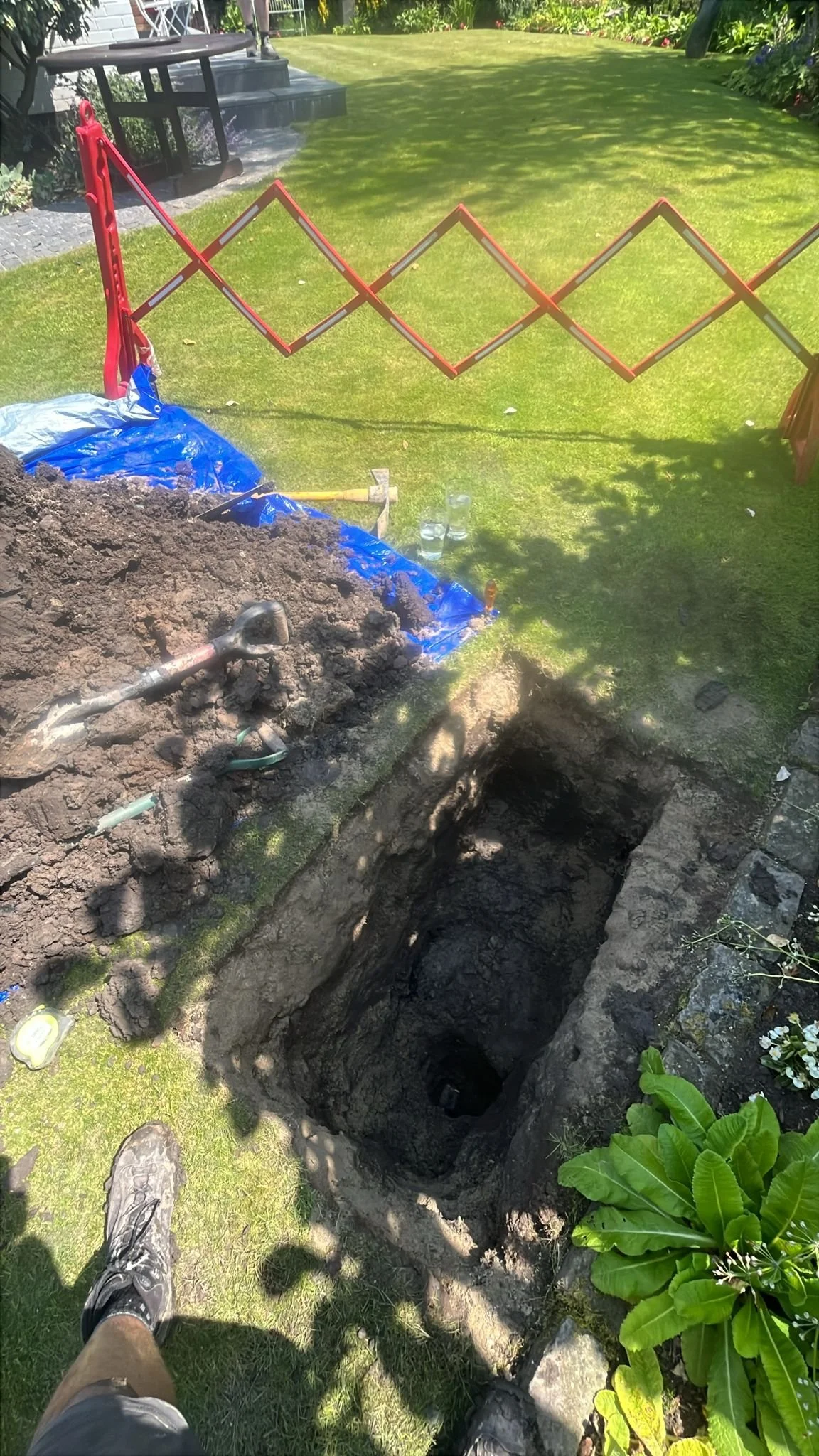
We recently carried out a percolation test at a residential property in Wilmslow, Cheshire, following a septic tank survey which identified that the existing drainage system was not functioning correctly. As part of the investigation, the property’s existing soakaway was found to be defective and required replacement.
A trial trench was excavated to the required invert level, with a 300mm x 300mm x 300mm test hole formed at the base of the trench. The percolation test showed that water drained slowly but steadily through the ground. Once the infiltration rate was calculated, the results were found to be borderline acceptable, meaning a replacement soakaway could still be designed for the property.
Using the test results, we calculated the required soakaway size needed to manage the surface water from the property. We will now continue working with the homeowner to install a suitable replacement soakaway system. This project demonstrates the importance of combining septic tank surveys, drainage investigations and percolation testing to identify the root cause of drainage issues and design a practical, compliant solution.
Frequently Asked Questions
-
Most domestic percolation tests can be completed during a single site visit, although this depends on the number of test holes, access, ground conditions and whether pre-soaking is required.
-
You may need one if the property is not connected to a mains sewer and the planning application relies on an off-mains drainage system. Requirements vary by site and local authority, so it is worth checking with your architect, planning consultant or planning officer.
-
They are similar in principle because both assess how water drains through the ground. However, foul drainage field testing and surface water soakaway testing are used for different drainage systems and should not be confused.
-
A rainwater soakaway is not the same as a foul drainage field. Sewage effluent should be discharged through a suitable drainage field or approved system, not a standard rainwater soakaway.
-
If the ground is unsuitable, the drainage proposal may need to be redesigned. Options could include testing an alternative location, changing the drainage design, using a different discharge route or seeking specialist drainage design advice.
-
We provide testing, site observations and reporting. Where design is required, the results can be passed to your drainage designer, installer, architect or engineer. We can also advise on what further input may be needed.
-
In most cases, trial holes need to be excavated. Depending on access and ground conditions, this may require a mini excavator or other digging equipment. We can advise on the practical requirements before attendance.
-
Yes. Early testing is often the best approach because it gives your project team drainage information before the application is submitted.
-
Yes. We carry out percolation testing and drainage surveys across Cheshire, Staffordshire, Greater Manchester and the wider North West.